 SlotGaugeCheck a catch
Blacknose Shark regulations in North Carolina
Sharks · Saltwater · 2026 season
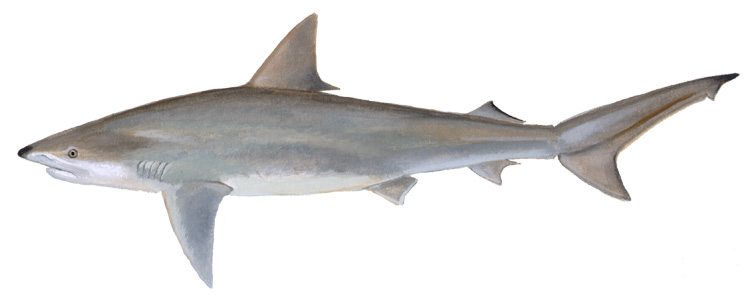
Blacknose Shark size limit, season and daily limit
| Where | Season | Size limit | Daily limit |
|---|---|---|---|
| NC coastal and joint waters (to 3 mi) | Open year-round | 54 inch minimum | 1 per vessel per calendar day (shore anglers 1 per person) |
Notes
- Boat anglers: 1 Atlantic sharpnose and 1 bonnethead per person per day, plus only ONE additional shark from the permitted list per vessel per day regardless of how many people are aboard. Shore anglers: 1 sharpnose, 1 bonnethead and 1 other permitted shark per person per day.
- Sharks (except spiny dogfish) must be caught on rod and reel or handline using a non-stainless, non-offset circle hook when using natural bait.
- Keep sharks whole: head, tail and fins must stay attached until offloaded at the dock (you may gut and bleed the carcass).
- Federal HMS Angling permit required for sharks in state or federal waters (hmspermits.noaa.gov). No sharks may be possessed in WRC inland fishing waters.
Exact NC Division of Marine Fisheries wording
- Season
- Open year-round (Jan. 1 – Dec. 31)
- Size
- 54 inches fork length
- Limit
- 1 per vessel per calendar day (the one 'additional shark'), or 1 per person per day for shore anglers
- NC coastal and joint waters (to 3 mi) — as printed
- “It shall be unlawful to possess nonhammerhead Large Coastal Shark species ... blacknose sharks, and finetooth sharks less than 54 inches fork length.”
Source: NC Division of Marine Fisheries, captured 2026-09-29 (2026 season).
Check your blacknose shark in seconds
Say it, snap a photo, or type the length. SlotGauge answers KEEP or RELEASE using today's North Carolina rules.
Open SlotGauge for Blacknose SharkMore sharks
About the blacknose shark

Species of shark
The blacknose shark is a species of requiem shark, belonging to the family Carcharhinidae, common in the tropical and subtropical waters of the western Atlantic Ocean. This species generally inhabits coastal seagrass, sand, or rubble habitats, with adults preferring deeper water than juveniles. A small shark typically measuring 1.3 m (4.3 ft) long, the blacknose has a typical streamlined "requiem shark" shape with a long, rounded snout, large eyes, and a small first dorsal fin. Its common name comes from a characteristic black blotch on the tip of its snout, though this may be indistinct in older individuals.
Read more about Blacknose shark on Wikipedia →
Text from Wikipedia, CC BY-SA 4.0. Regulations on this page come from NC Division of Marine Fisheries, not Wikipedia.
All 120 North Carolina species A–Z →
Frequently asked
What is the size limit for Blacknose Shark in North Carolina?
54 inch minimum in North Carolina state waters.
How many Blacknose Shark can you keep per day in North Carolina?
1 per vessel per calendar day (shore anglers 1 per person).
When is Blacknose Shark season in North Carolina?
Open year-round.
Is my Blacknose Shark a keeper today?
A blacknose shark is a keeper today if it measures at least 54 inches, with 1 per vessel per calendar day (shore anglers 1 per person).